As a medieval martial method, beheadings are used to scare soldiers and collect war trophies and wage psyops. When the same tactic consumed the 2003 LoC ceasefire before its revival in 2021, it almost pushed the two nuke-armoured neighbours on the warpath.
A month before Delhi would secretly execute Indian Parliament convict Afzal Guru inside Tihar Jail, hinterlands of Kashmir witnessed the resurgence of primitive warfare. The smoky showdowns in the times of great game only set the stage for the renewed rattle in the heartland. Sleuths adept with the low-intensity warfare called it the beginning of the end of the Vajpayee-Musharraf ceasefire era.
In Srinagar then, the secret police would predict the soviet-era-style insurgent influx in the valley with the drawdown of war-freaked American troops in Islamabad’s strategic depth.
“Strategic sands were shifting, so were the motives of non-state actors in Pakistan,” says a forty-plus intelligence officer in Kashmir capital. “We knew it was coming, and that macabre act on January 8, 2013, only vindicated our stand.”
What happened that day eventually ended the enforced silence of guns on the LoC, making the Indian army to state: “This year [2013] is going to be crucial.”

The sparkplug was the sudden storm-trooping of the black-camouflaged Pakistani BAT—Border Action Team—in the Mankote area of Poonch’s Krishna Ghati. In military methodology, BAT raids come after wary scouting of the frontline weak spots.
The raid happened at 10:30 am on January 8, 2013, when, according to the Indian army, a BAT crossed over the LoC under the cover of foliage and fog. They ambushed Sector-10 of 13 Rajputana Rifles.
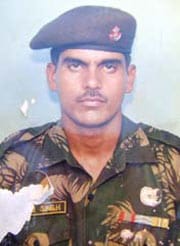
30 minutes later, the “commandos” retreated from the 600-metre covered ‘enemy territory’, leaving behind two dead soldiers, including a beheaded body of Lance Naik Hemraj.
The headless soldier instantly triggered raging reactions in army rank and file.
The chilling act dented the September 2003 ceasefire—in which both sides had agreed to end the frontier fireworks along the 740 km LoC—signed by Atal Bihari Vajpayee and Pervez Musharraf. Pundits blamed “intelligence failure” for the new LoC crisis.
Interestingly, barely two days before the beheading, Wali-ur-Rehman of Tehrik-e-Taliban Pakistan (TTP) had vowed to “come and get Kashmir liberated from India”. The announcement only alarmed “all and sundry” in the state apparatus, as there was no history of TTP in the valley.
In Delhi, these statements only made the beheading appear as a brainchild of the non-state actors sitting across the fence. In the larger unfolding pattern, Indian Home Minister Sushil Kumar Shinde named the “2008 Mumbai attacks mastermind” and Lashkar-e-Toiba founder Hafiz Saeed’s ‘covert visit’ to LoC in the run-up to the beheading.
Shinde under whose nose Afzal Guru would be hanged cited some obscure intelligence. Saeed termed it a “blatant lie”. Even Pakistan’s Inter-Services Public Relations (ISPR) dismissed Delhi’s claim as “propaganda” to divert international attention from an earlier incident on 6 January 2013, when a Pakistani soldier was killed by Indian troops.
Naming Anwar Khan from Muzaffarabad as the ‘hired gun’, Military Intelligence, meanwhile, said that the beheading was the peak of the LoC skirmishes since November 2012. It linked the ceasefire violations in 2012 with the revival of militancy. It was the time when Kashmir’s new-age armed dissent was covertly building up in the valley before becoming the social media scene.

However, India under Manhoman Singh was unrelenting. “After this dastardly act,” Singh said, “there can’t be business as usual with Pakistan.”
If Pakistan does not return the severed head of the Hemraj, Sushma Swaraj, then the Indian Opposition leader said, then “India should get at least 10 heads from the other side”.
With Indian news anchors censuring bilateral ties, protests soon broke outside the Pakistani High Commission in Delhi. Pakistani hockey players in India were swiftly sent back, while visas to Pakistani senior citizens were put on hold.
Soon as the foreign countries endorsed de-escalation, a brief phone conversation between the military heads of the two countries calmed down the tempers.
But the 2013 beheading largely proved to be the continuation of the frontier trend starting on the heels of the Kargil War, when a six-man patrol led by Captain Saurabh Kalia landed in Pak custody in the Kaksar sector. 22 days later, their mutilated bodies were returned.
Similarly, in February 2000, the headless body of Sepoy Bhausaheb Talekar was delivered to his shocking unit. The beheading was reportedly done by Ilyas Kashmiri, an ex-SSG commando who later headed Huji’s 313 Brigade before getting killed in a 2011 US drone strike.
Such beheadings were going on till January 2020 — when the body of army porter Mohammad Aslam (28) was found with a missing head.
But till today, the headhunting of January 8, 2013, remains unparalleled given its impact.
And now, eight years after that beheading ended the 2003 ceasefire, calm has returned with the revival of truce.
At Point Zero in Mendhar, where Hemraj was found headless, the two warring armies are staring each other with the loaded gun.
What happens next remains as uncertain as the silent guns of the LoC.
To help us strengthen the tradition of quality reading and writing, we need allies like YOU. Subscribe to us.
Leave a Reply