A British-era photo-studio on the iconic Bund had taken some rare shots of the pre and post-Dogra-ruled Kashmir before its ace lensman would make its classic capture a thing of beauty forever.
Unlocking the main door of the studio where almost five decades of his life have passed, Ghulam Mohammad Sofi turns pensive as he did while stepping in for the first time.
It was the early 1970s when Sofi aka Gul started working in the studio after leaving back his studies and a year-long stint as a cab-conductor.
“Never did I imagine that most of my life would pass at this place and with this art only,” says Gul whose shy eyes reflect the politeness he has for the place and the art of photography as well.
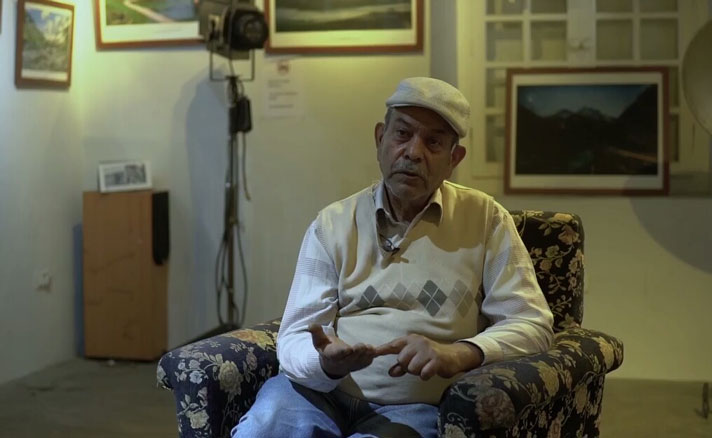
Introduced to the place by his uncle who was working as a foreman at the studio, Gul had developed an eye to click at his teenage only.
“It was an overwhelming sight to watch when I along with my friends would go up to the hill-top of Shankaracharya,” he says while mentioning what glued him to the landmark-stop that has kept its British-era façade alive on the Jhelum Bund Srinagar.
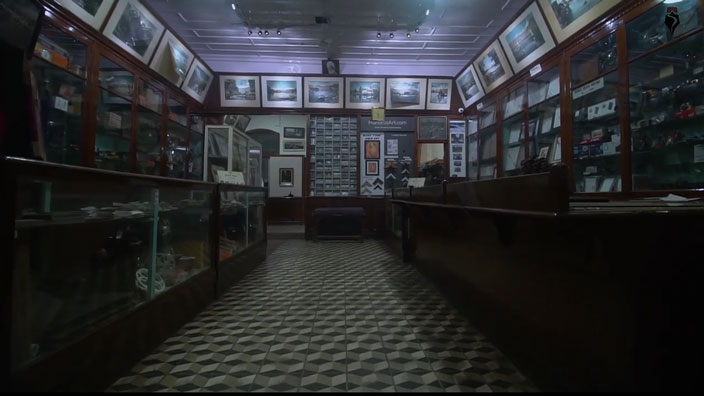
Almost five decades on, Gul has become synonymous with the place—‘Mahatta & Co’, which is nothing less than a treasure-trove of iconic shots.
The-65-year-old Gul sees watershed of his profession-switch from a cab-conductor to a photographer as a ‘blessing in disguise’.
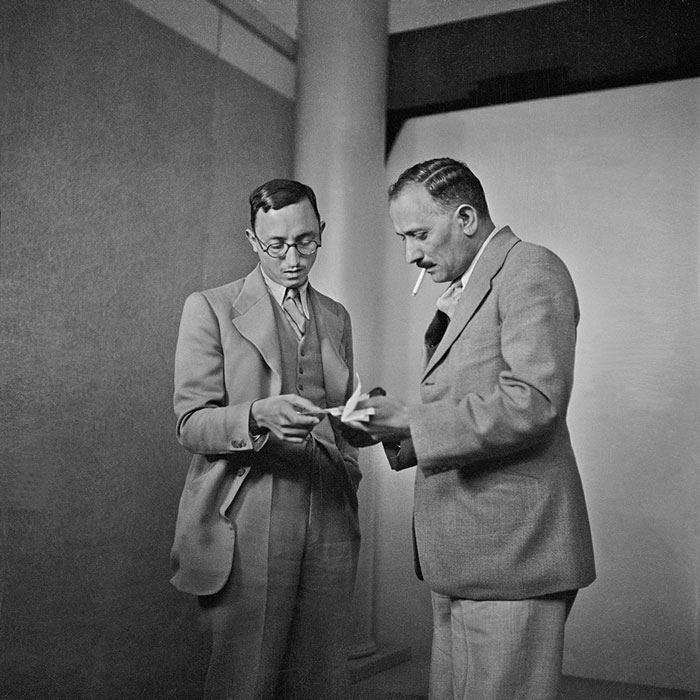
Learning, growing and working under a humble man like R.C Mehta is an unspeakable experience for him.
“A man who treated his workers like his wards and made sure that learning process is not compromised under the compulsion of work” is how Gul remembers his first boss.
“Not only were we encouraged to work and produce on both colour and monochrome films but for outdoor shoots, we were provided with a variety of cameras,” he recalls.
Gul all his life has clicked what today are considered as ‘vintage cameras’ like Linhof, Panorama, Rolleiflex and Voigtlander using 35mm rolls.
To him, digital photography is consuming the creativity and art mechanism from the ‘artistic photography’.
“My reluctance to switch to digital forms isn’t backed by the fact that all my life I’ve used traditional model of clicking on films,” he tries to set the records straight.
“My perception that photography as an art and a process begins the moment you hold a camera and roll a film on it and only ends when you develop the final picture of the film.”
To him, the involuntary vigilance that a photographer must identify himself with as an artist is very much ignored by digital forms of photography.
Coming from a middle-class family where his father and brother worked at the post office, Gul explored a world that his family was oblivious to throughout the 1970s and 80s.
“Apart from travelling places within J&K and mainland India, I’ve captured events that hosted Indira Gandhi, Atal Bihari Vajpayee, Rajiv Gandhi, Sheikh Abdullah and few other personalities that shaped the course of events or the history,” he makes mention of his career landmarks as a photographer.
During this involving and evolving time when the place was happening and full of life, among the routine visitors would be a kid always anxious to visit the workplace of his grandfather.
Hemant Mehta, the grandson of R.C Mehta, always came up to see another person other than his ‘dadu’. Gul knew the kid is looking for him only.
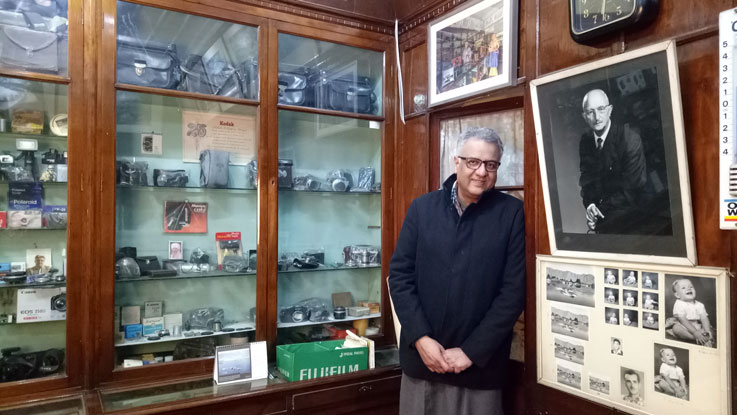
For Hemant, the story behind the brand ‘Mahatta’ is nothing less than a roller-coaster ride that has its beginning at Dinanagar in District Gurdaspur of Punjab.
“The parents of my grandfather were murdered in a family rivalry in 1912 and he along with his elder brothers A.N Mehta and R.N Mehta ran for their lives and went to Dalhousie, Himachal Pradesh,” says Hemant, while adding that the elder brother A.N Mehta started working with a British Photographer at Dalhousie only.
Months later, the brothers were able to make a contact with their sister married to a banker at Srinagar.
“It was in 1913 when my grandfather along with his two brothers shifted to Srinagar,” continues Hemant. “After settling down, the elder brother, A.N Mehta, took a loan from the bank and started a Photography studio named Mehta Photography at Lal Chowk.”
Within a couple of years, ‘Mehta Photography’ had shifted to its current location on the Jhelum Bund with a new name ‘Mahatta & Co’, the way Englishmen would pronounce it and for their covalence being the main customers.
“While the main shop remained on the bund, the studio was set-up on a houseboat in the Jhelum where reflectors were used to pass the lights coming from the water surface,” says Hemant to whom the picture of the houseboat studio makes sense to the level of the creativity an art leads to exploring.
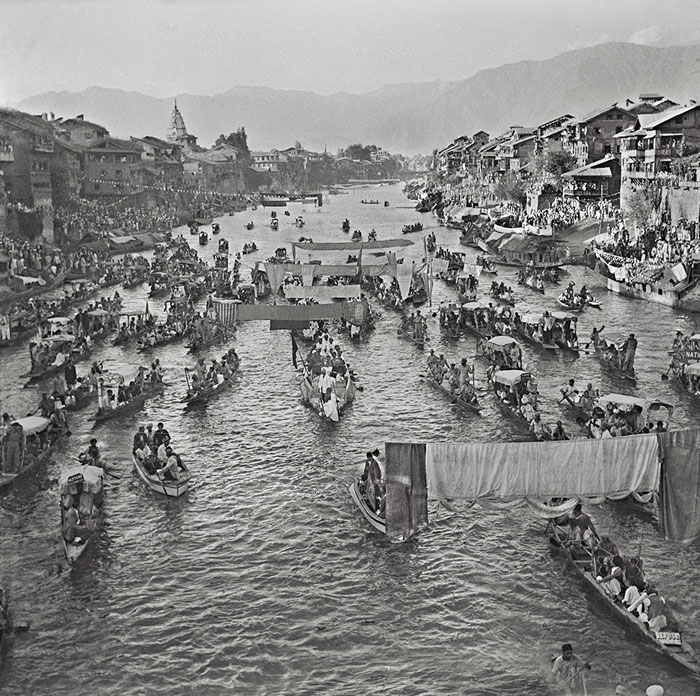
Since most of their clients remained from the Royal family whose inclination was towards portraiture, the Englishmen were stepping ahead, aiming to buy their own cameras.
“All going smooth, ‘Mahatta’ had already branched at Rawalpindi, Jammu, Gulmarg and Pahalgam,” adds Hemant, before the inevitable happened, ‘Partition’.
Apart from the elder brother A.N Mehta, everyone fled to Punjab and soon R.N Mehta and R.C Mehta went to Delhi.
“It was 1952 when my grandpa along with his brother R.N Mehta set up the ‘Mahatta & Co’ at Connaught Place Delhi,” says Hemant while adding that later on, it was Srinagar workplace that came to his grandfather after the business was divided between the three brothers.
Since then, R.C Mehta and after him, Jagdish Mehta along with his wife took the show on and to make the studio as iconic as its photographs.
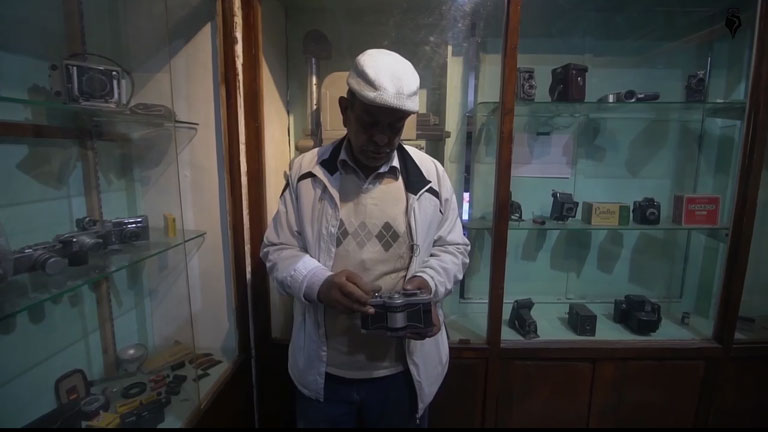
It has been 4 years since Jagdish Mehta passed away and Hemant’s occasional visits even today mean beyond perception to the place with the archives, the vintage post-cards and the 5-decade-long care-taker Gul.
(This Feature appeared in December 2020 print issue of the Mountain Ink.)
To help us strengthen the tradition of quality reading and writing, we need allies like YOU. Subscribe to us.
Leave a Reply