A Burdened Soul
This isn’t a story I am proud of, and it’s not one I ever planned on writing. It’s not even one I planned on living. When I was younger, I imagined that leaving Islam was a logical process, one arrived at through careful analysis of Islamic beliefs and finding in them something inherently contradictory or something that one disagreed with. Thus, I never really comprehended it, and it consistently confounded me. How could a person go from believing in only God and worshipping Him alone to disbelieving in Him and worshipping creation instead of Him? It just didn’t make any sense.
I remember being deeply intrigued by the story of a famous NFL player who had left Islam and converted to Christianity. I was never a football fan, but as a youth, I had been a fan of his, mainly because he was both a star player and a practicing Muslim. When I’d heard that he had converted to Christianity, I dismissed it as an absurd rumor, it was so unbelievable. The media was in the habit of taking sensational stories and making them front-page “news” with little to no regard for authenticity or credibility. I’d assumed this was what had happened with the football player. Or at least I was hoping so—because the alternative was too difficult to fathom.
In my young mind, it was impossible to go from being a “devout Muslim” to worshipping one of Allah’s prophets and declaring this shirk as the only way to Heaven. Some months before, I had read a magazine feature about the NFL player in which he explained Islam to the readers and discussed the significance of the five daily prayers. I remember the piece really touching my heart. So it was difficult to reconcile this inspirational image with someone leaving Islam.
Months later, I was watching television and happened upon a Christian talk show in which the host said that today’s guest would be the NFL player telling the story of why he’d left Islam. Naturally, this caught my attention, and I waited to see if the athlete would really be there. Eventually, he came on to the set, and the first thing I noticed about him was how visibly uncomfortable and fidgety he was. I watched as he kept glancing over his shoulder as if he expected someone to walk in and “catch him” there, though I’m sure he was fully aware that he was on national television.
When the host asked what inspired his decision to leave Islam for Christianity, the NFL player said, “When I was Muslim, I always felt guilty when I sinned. Now that I’m Christian, I don’t feel guilty anymore because I know Jesus died for my sins.”

I was only a teenager at the time, but I felt like it was the stupidest thing I’d ever heard. I nearly laughed out loud for how ridiculous this man’s reasoning was. So you want to get drunk and sleep with multiple women without the guilty conscience? I shook my head in humored disbelief.
But at least his decision made sense to me now. I had been waiting for some profound reflection on how he’d happened upon some groundbreaking “evidence” that God was now a man in flesh and part of a Trinity instead of the Creator who was completely separate from His creation and who shared no kinship to them. I couldn’t imagine what that “evidence” would entail, but at the time, it was the only logical reason my mind could accept for leaving the worship of God alone.
However, after hearing the NFL player’s explanation, I understood his soul’s desperate longing to live life without the burden of regret, self-correction, or personal accountability for his wrongs. Nevertheless, though I myself still had a lot to learn about life, I knew that even many devout Christians would find the man’s reasoning problematic. Till today, I find the reasoning problematic myself.
But the man’s story no longer confounds me.
It terrifies me.
Because I know how close I myself came to allowing my own soul to become “unburdened” by giving up on myself and my Lord.
I still haven’t found all the words to explain exactly what was happening to me during this time. But in this book, along with the video series , I pinpoint ten spiritual struggles that I faced during that time, along with ten solutions that I implemented to weather the most tumultuous spiritual storm of my life.
Our Agreement.
The agreement was
I was to accept the blows
And accept them quietly.
I was to show hurt
To ensure my shame
And to deny hurt
To protect their name
If they lied
I was to believe them
If they slandered me
I was to repent
If there was pain
(And there always was)
I was to cry in silence
And smile in front of the world
If I needed help
Love
Compassion
Or relief
I was to confide in the ones who hurt me
Or risk
Suffering beyond belief.
I wrote this poem while in a state of melancholy as I reflected on what I’d experienced in my life thus far as a result of taking to heart what I’d been taught about not having the right to exist. In my sincere ignorance and spiritual zeal, I had allowed myself to be mistreated and abused by those who claimed to love and care for me, and who claimed to have so much religious knowledge that I was obligated to do everything they said.
As I withstood the slander, emotional manipulation, and spiritual abuse, I was continuously reminded—often by the abusers themselves—of the rights these people had over me, as commanded by Allah Himself. Yet ironically, the reason I was continuously slandered and abused was that I consistently made exceptions to fulfilling the demands and desires of these people whenever I genuinely believed that doing so would displease Allah or harm my life and soul.
On many occasions, I would try to explain myself to them and give detailed, heartfelt explanations (and apologies) so that they wouldn’t be offended by my life choices. But it was to no avail. I would be consistently asked, “Who do you think you are?”
So Why Am I Muslim?
It makes no sense to question one’s spiritual path based on mistreatment by those who claim the same path. However, due to the combination of my spiritual exhaustion and emotional trauma, I began to question why I was Muslim. I don’t have a detailed analysis of why this question weighed so heavily on me for so long, but it did. As a grappled desperately for an answer, I felt the dark waters of disbelief pulling me in, and I had no idea if I could keep my head above the water.

Why I Almost Gave Up
This is not a story that is easy to put into words. However, when I look back at the first problem I faced during my spiritual crisis, I can safely say it was rooted in three things pulling me down:
- I felt overwhelmed spiritually such that I feared I could no longer continue.
- I felt that I didn’t have the right to exist.
- I found many Muslim communities to be sources of pain and institutionalized pride.
Mostafa Meraji / Unsplash
I Felt Overwhelmed Spiritually
During my spiritual crisis, Islam began to feel like an increasing list of doubtful, haraam, and religious obligations; and I couldn’t keep up. I wanted to hold on to my emaan, and I knew that I needed to. But I felt like I couldn’t.
Part of the problem was my desire to stay away from anything that could even possibly be wrong. As a result of this determination, I followed the strictest opinion on nearly every ikhtilaaf issue amongst the scholars. The following excerpt from my blog “Walking Guilty, the Weight of Doubt and Sin” paints a pretty accurate picture of what led to this spiritual exhaustion:
I thought I had it all figured out. I know that sounds cliché, naïve even, but it’s true. I wasn’t going to compromise my soul. I wasn’t going to open myself up to sin. I wasn’t going to Hell with my eyes open. Yes, I knew it wouldn’t be easy. I knew I’d have to sacrifice and struggle. And I knew there would always be that internal battle for sincerity that nobody could conquer perfectly in this life.
But I could at least protect my actions in some way.
The Prophet (peace be upon him) said, “The halaal (permissible) is clear and the haraam (forbidden) is clear, and between them are matters that are mushtabihaat [unclear or doubtful]. Whoever is wary of these doubtful matters has absolved his religion and honor. And whoever indulges in them has indulged in the haraam. It is like a shepherd who herds his sheep too close to preserved sanctuary, and they will eventually graze in it. Every king has a sanctuary, and the sanctuary of Allah is what He has made haraam. There lies within the body a piece of flesh. If it is sound, the whole body is sound; and if it is corrupted, the whole body is corrupted. Verily, it is the heart” (Bukhari and Muslim).
In my youthful zeal, I thought that staying away from doubtful and forbidden matters was as simple as doing what was “safest”: following the strictest opinion so as to remove any possibility of falling into error or sin.
So that’s what I did.
In my commitment to religious “safety,” I broke all my music CDs and stopped listening to music, thinking, “It might be a sin.” I questioned singing and dancing [even in my own home] because that too had been labeled as haraam by some scholars. I even tried to stop listening to nasheeds (songs without musical instruments) because “that was safest.”
Mohamed Nohassi / Unsplash
I donned the niqaab (the face veil), thinking, “It’s certainly not wrong to wear it.” I wore an over-the-head abaya and gloves, and even experimented with covering my eyes. And I even left America to “make hijrah”, thinking, “I fear for my soul in a non-Muslim society.”
And though I loved to read, I even stopped reading novels for fear of “wasting time.” I stopped giving speeches in front of men because, allegedly, that was a fitnah (severe temptation) for men. I stayed away from co-ed gatherings because I didn’t want to “intermingle.” I stopped taking and keeping pictures, and contemplated throwing away my family photos because “pictures are haraam.” I questioned my calligraphy wall art because it “might be disrespecting the Qur’an.” I stopped reading the Qur’an during my menses because menstruating women were “unclean.”
And, believe it or not, the list goes on…
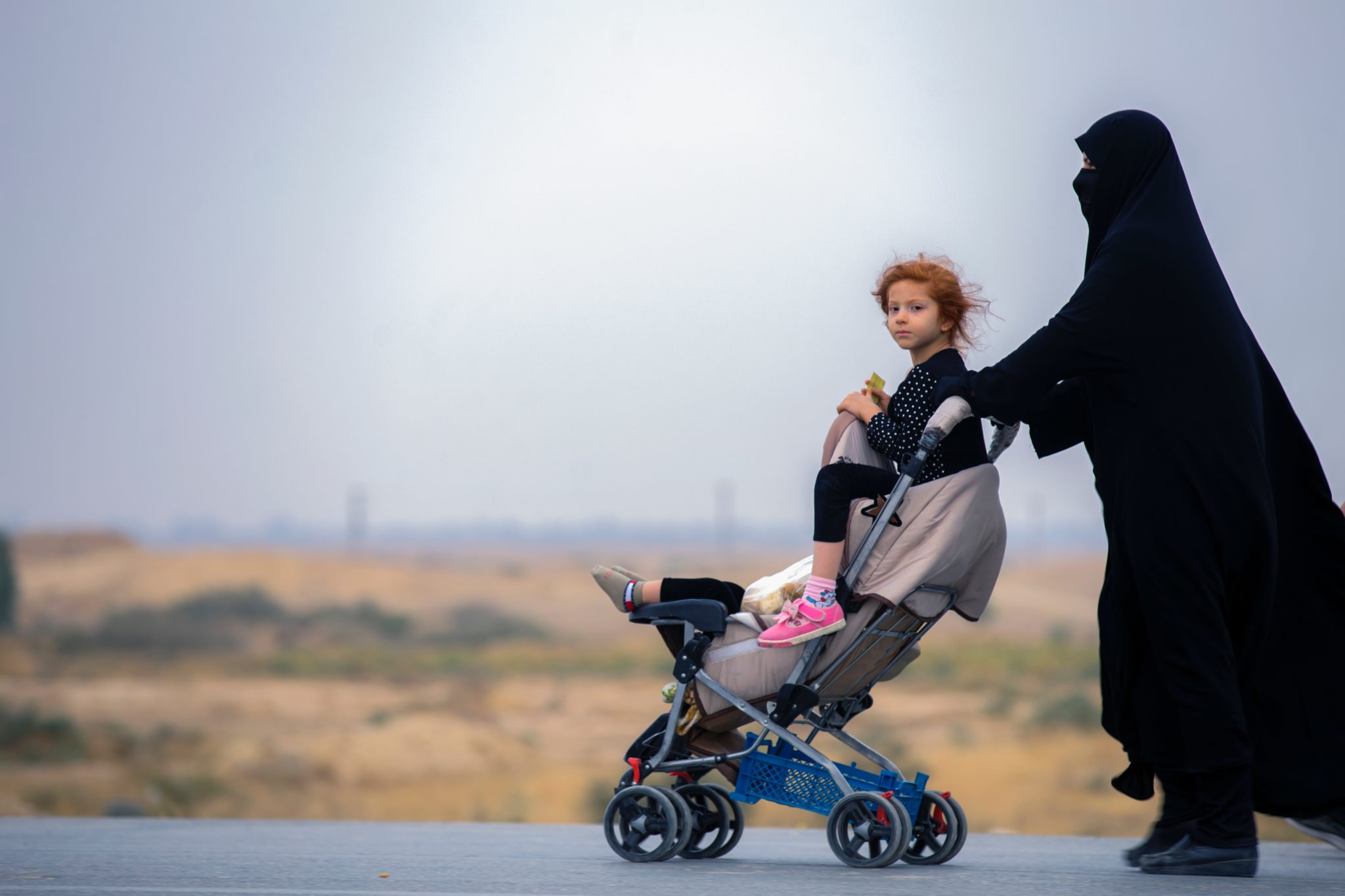
Stay Away From Doubtful?
“Of the most doubtful matters to me is continuously staying away from what is doubtful to someone else because they said it should be doubtful to me. This sort of spiritual manipulation makes me more fearful of my soul than that ‘doubtful matter’ ever could. So I stay away from doubtful by focusing on what my Lord has made clear—and by striving to not stress over others’ never-ending ‘what ifs’ of mind and heart, which they label ‘doubtful matters’ in my faith.”
—from the journal of Umm Zakiyyah
Prophet Muhammad (peace be upon him) said, “The Religion is easy. So whoever overburdens himself in his religion will not be able to continue in that way. So you should not go to extremes, rather strive to be near perfection. Receive good tidings that you will be rewarded, and gain strength by offering the prayers in the mornings, afternoons, and during the last hours of the nights” (Bukhari).
As I reflected on the burdens I’d put on myself and the personal extremes to which I’d gone to “be safe,” I had an epiphany: Religious safety isn’t an objective matter; it’s a personal matter. Safety isn’t something you arrive at based on a theoretical reality “out there”… on the pages of Islamic books or in scholarly lectures. It’s something you arrive at based on your spiritual reality “in here”… in the heart and soul—and rooted in what you truly understand and believe about your faith.
No, you certainly cannot throw out objectivity altogether and ignore scholarly evidences, but after steering clear of what is undeniably wrong and doing what is undeniably obligatory, religious safety is first and foremost what preserves your soul.
What ‘Staying Away From Doubtful’ Really Means
It is well known that religion is defined by core beliefs and specific acts of worship. Islam is no different. Thus, the rules of what we believe and how we worship are very specific. In fact, they form the very definition of faith. The slightest deviation from what Allah and His Messenger taught regarding belief and worship is at the very least bid’ah (blameful religious innovation) and at the worst kufr (disbelief in Islam itself). Hence, our greatest concern for religious safety must be in protecting our beliefs and worship.
It is well known that worldly affairs, as a general rule, are not religious matters. Thus, humans are free to enjoy and benefit from anything of this world that they wish—unless Allah has expressly forbidden it (i.e. eating pork, drinking alcohol, or engaging in any sexual intimacy outside the God-mandated union between a man and a woman).
In other words, all matters of belief and worship have the general principle of prohibition unless there is clear proof for them in the Qur’an and Sunnah; and all matters related to our worldly life have the general principle of permissibility unless there is clear proof against them in the Qur’an and Sunnah.
Thus, for me, I was able to reclaim my faith by staying away from doubtful by adhering to this general rule, rooted in the Qur’an and Sunnah: If I hear of a religious belief or mode of worship that I cannot be absolutely sure (based on evidences) is sanctioned in the Qur’an or the Sunnah, I stay away from it “to be safe.” But if I hear of a worldly matter being prohibited based on “proofs” not rooted in clear evidences from the Qur’an and Sunnah (or historical ijmaa’), I consider it permissible “to be safe.”
Focus on Allah, Not Other People’s Doubts
Reaching a spiritual place where I could let go of other people’s doubts and focus on my own has been a long, tough road. Shedding the indoctrination that I don’t have a right to my own mind, life, and soul has not been easy, as many communities and Islamic classes don’t teach tawakkul, such that you establish a personal relationship with Allah and trust in Him alone. They teach human dependency and scholar-worship, such that you establish a spiritual relationship with your imam or teacher, whom you are expected to trust to do your thinking and soul-work on your behalf.
In some cultures, this human dependency is taught as being between parent and child, such that parents must be trusted to do the thinking and soul-work on the children’s behalf, even when these “children” are now adults.
However, in my own spiritual crisis, I reached a point where this “so-and-so always knows better than you” thinking was no longer an option, literally. It was either let go of this human dependency or let go of my emaan. I chose my emaan.
Today, I consciously stay away from environments and classes that teach self-denial over self-care, particularly regarding worldly matters subject to permissible disagreement. Islam itself has enough rules and guidelines that restrict aspects of our worldly life such that healthy self-denial is an integral part of practicing our faith. Thus, I don’t understand the obsession of some Muslims with continuously adding to this list.
And here, I differentiate between those who follow the strictest view because they genuinely believe it to be correct in front of Allah (and thus respectfully share with others what they’ve studied or learned), and those who resort to emotional manipulation or spiritual abuse when it becomes clear that the other person is not convinced that such-and-such is haraam. When their threats of Hellfire, censuring quotes from their sheikhs, and implications that the person is a bad Muslim don’t work; like clockwork, they resort to the final spiritual manipulation technique, as if reciting from a memorized script: “You should stay away from what’s doubtful.”
Today, when I hear this statement used as a guilt tactic to convince someone to follow the strictest view on a non-ijmaa’ issue, I sometimes have to recite dhikr to calm down, I get so angry. As I mentioned in my blog “Suffering From Religious OCD?”: You cannot live your entire life throwing every worldly issue into the category of “doubtful matters” just because you aren’t personally aware of its specific “ruling” in Islam. If you do, you’ll likely overburden yourself in the religion until you are paralyzed into inactivity, anxiety, and stress—and until you give up on practicing Islam altogether.
Furthermore, as many scholars have explained, “doubtful matters” is not a definitive category of issues in Islam. What is doubtful to one person is not doubtful to another, as “doubtful” depends on each individual person’s level of Islamic knowledge, as well as his or her own internal discomfort with something.
Unfortunately, it is rare that a Muslim advises a fellow believer to simply turn to Allah for guidance on how to handle a practical dilemma or a confusing predicament that involves permissible disagreement in Islam. Instead, we rush to make the person’s life difficult by saying, “Stay away from doubtful,” as if this is the cure-all to all of life’s problems and uncertainties. But we label this approach “protecting the soul.”
However, I know firsthand the spiritual harms of continuous self-denial in the name of “protecting your soul.” I stayed away from any and every thing that I felt could even be possibly be doubtful, only to find myself exhausted and my soul harmed so much that I felt I couldn’t even be Muslim anymore. I wish it had occurred to me that the most serious “doubtful matter” to stay away from is that which makes me doubt my faith itself.
To help us strengthen the tradition of quality reading and writing, we need allies like YOU. Subscribe to us.
Leave a Reply